user.first_name
Menu

Mortgage News

England has a potential social and affordable housing shortfall of 297,000, research suggests

England has a potential social and affordable housing shortfall of 297,000, research suggests
Shekina Tuahene
Written By:
Posted:
August 14, 2025
Updated:
August 14, 2025

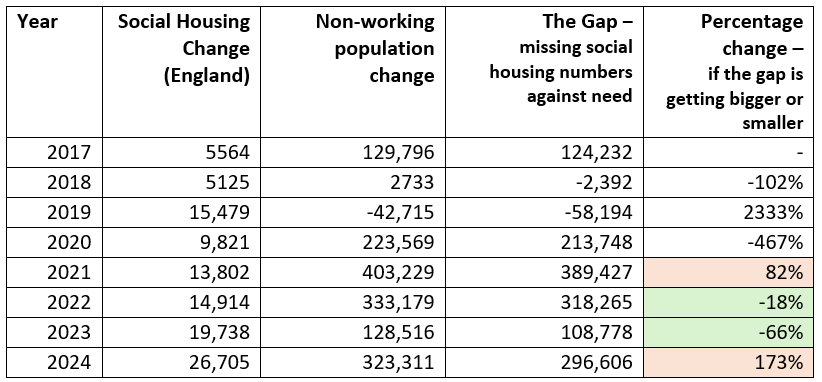
England is in need of 296,607 affordable and social homes to support those in need of this housing, research has claimed.

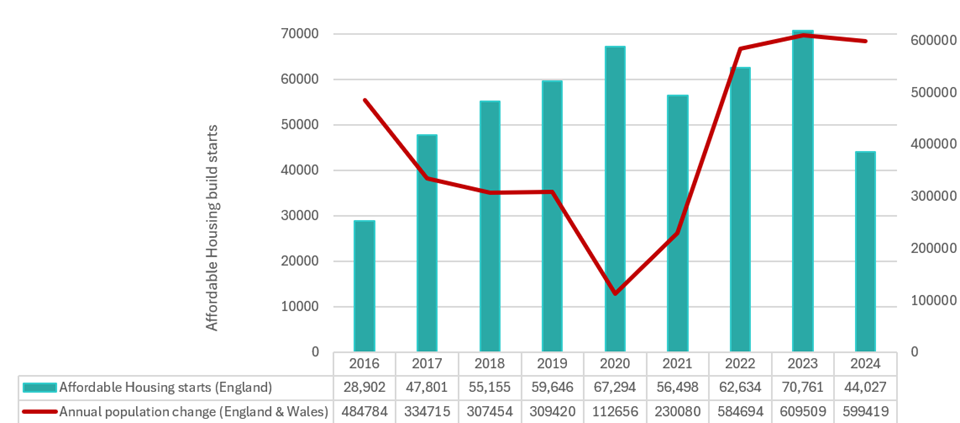
Analysis from property and legal data firm Search Acumen found that 2023 recorded the highest annual increase in population growth for more than 75 years. At the same time, affordable home build starts declined notably. 

This figure fell by 37.8% in 2024, the largest decline in 10 years and the lowest number of build starts since 2015, when records began. 

In 2024, there were 44,027 affordable home build starts, down from 70,761 the year before. 
Andrew Lloyd, managing director of Search Acumen, said: “Our research looks at trends as to whether we are building enough homes fast enough. We know the answer to this to be no, but what is troubling is just how far behind we really are.” 


Not enough social housing 

The analysis also found that a lack of social homes added to the housing shortage, as the social housing stock did not match the non-working population, who outnumbered these homes by 12:1 in 2024. 

Search Acumen’s research revealed that the gap was at its widest since 2019. 

The firm also found that the number of economically inactive people and those in need of social care rose almost 10 times faster than the working-age population, suggesting a growing need for this type of housing. 

Lloyd added: “In England, there were approximately 4.5 million social homes, down from 5.5 million in 1979, thanks to long-term losses in demolitions, conversions, and inadequate rebuilding. Looking at social rent alone, over the past decade, there was a net loss of 177,500 homes in England. Meanwhile, the waiting list climbed to 1.33 million households last year, up 10% since 2022.

“Forecasts suggest this could rise to two million households by 2034 if social home building stays unchanged. With a growing base of people not working, the mismatch between supply and demand is acute.” 

He continued: “For the current government, closing this gap will be hard, but Labour is keen to prove themselves and show results within their electoral term. There is hope things will change, but the complex economic backdrop of tighter margins, inflated costs and skill pressures on housebuilders weigh [heavily] against social need.” 

Search Acumen said while this data assessed housing stock in England against the wider UK population, it still pointed to concerns faced by the current government around housing. 


Managing profitability with demand 

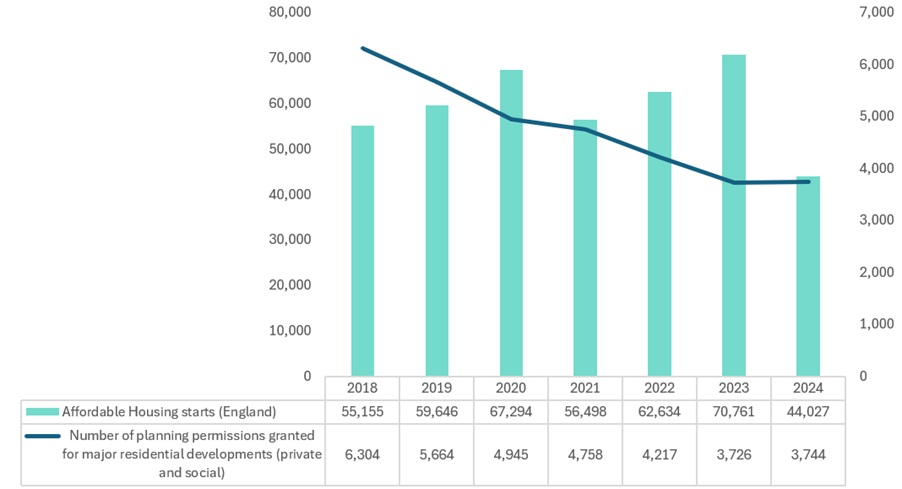
Search Acumen said the number of planning permissions granted for residential developments in England – which usually include a proportion of affordable homes – was almost half of the peaks seen in 2016, 2017 and 2018, representing a 41% decline. 

The firm said this showed there was a need for housing providers to balance profitability with private demand. 

Lloyd added: “I believe this is an inflection point for the sector. Post-war, we saw government-funded local authorities creating a housing boom – something we are about to see again under Labour, driven by social need, not private enterprise.” 

The government’s £39bn Social and Affordable Homes programme announced earlier this year will be a much-needed raft for many providers in the next 18 months. 

He added: “Whilst the working population rate is declining against a general ageing population that is demanding more of social care, it begs the question: where will people live? As the commercial viability of building large-scale developments is coming under more and more scrutiny with the end of Help to Buy and ever-tightening profit margins, the social housing need must be met instead by the public sector.

“Whilst it is socially responsible to build affordable homes, it may not be profitable – this means the government have a duty to act with more funded schemes likely to fill the void.” 

Privacy Preference Center