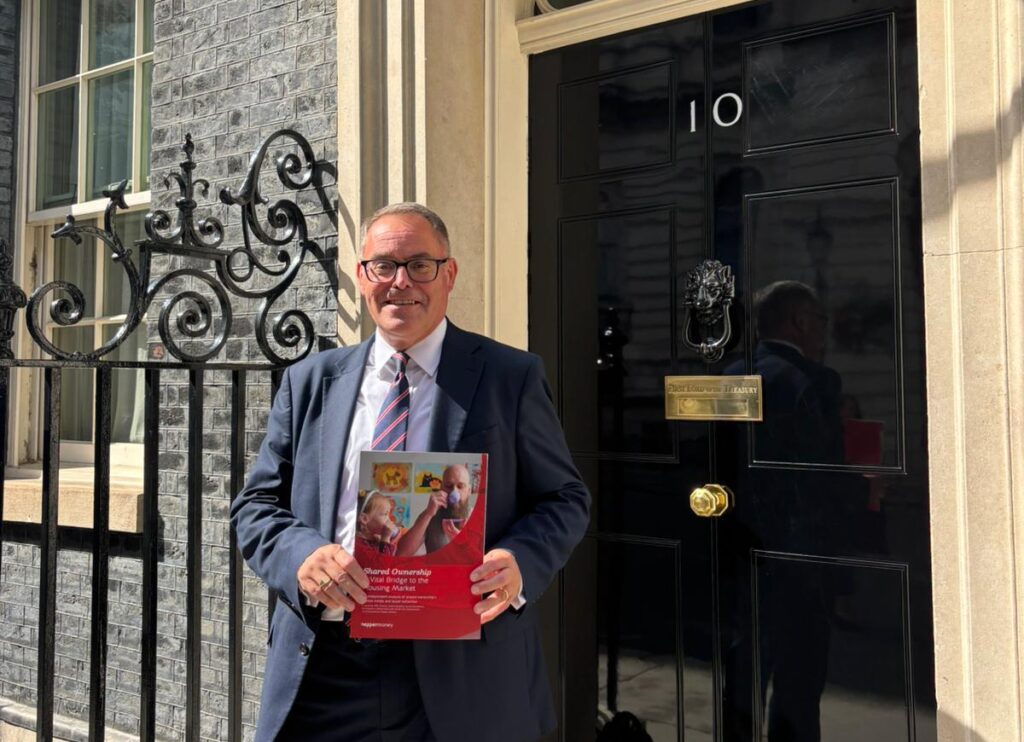

Pepper Money has commissioned and released a report, Shared Ownership – A Vital Bridge to the Housing Market, which highlights the important role shared ownership plays in the complex housing market landscape and was presented at 10 Downing Street.
The report found that there was a “significant affordability gap” that shared ownership has helped to bridge.
It found that in 2023-24, the average shared ownership buyer purchased a 40% stake in a home worth £313,100, putting down a deposit of £22,800 and borrowing £99,200.
On the other hand, the average first-time buyer across England now requires a deposit of £69,000, more than three times higher than those purchasing with shared ownership, and a mortgage advance of £223,000. In London, the deposit gap is even wider, reaching £155,000.
Pepper Money said this shows the “vital role shared ownership continues to play in widening access to homeownership, particularly for those otherwise locked out of the market”.

Your First Home: confidence to build
Sponsored by Halifax Intermediaries
The white paper calls for a more “inclusive shared ownership market” and comes ahead of the government’s prospectus for its new Social and Affordable Homes Programme in the autumn.
It focuses on three policy recommendations that aim to “safeguard the future of shared ownership, ensuring it evolves in line with economic realities, supports financial recovery and plays a central role in the government’s housing ambitions”.
The report has called for the introduction of an independent body to collect and publish industry data, which would provide an “evidence-based picture” to policymakers and other stakeholders about successes and improvements that need to be made to shared ownership.
Another recommendation is an increase to the household income threshold each year in line with average earnings growth.
The current thresholds stand at £80,000 nationally and £90,000 in London and haven’t been improved since October 2016, representing a 35% decline in real terms due to inflation.
If these are not adjusted, then it “risks creating a situation where shared ownership locks people who have no other routes onto the housing ladder out of the market, which could undermine both demand and supply”.
The final recommendation is a review of Homes England’s Capital Funding Guide to create a “more standardised approach that accommodates customers who are just off the high street”.
Rob Barnard (pictured), intermediary relationship director at Pepper Money, said: “Shared ownership offers a vital bridge to the housing market for so many people who otherwise would struggle to buy their own home, but we know without action, this bridge will get harder to use for those who need it.
“Our policy recommendations are pragmatic, cost effective, and provide certainty for the sector to ensure that shared ownership continues to be the vital pathway to homeownership so many rely on. The government has rightly outlined their ambition to build 1.5 million homes by the next election, and that can only be achieved by supporting a range of types of homeownership, including shared ownership.”
He continued: “The unintended consequence of the status quo is a less viable tenure, with shared ownership becoming less accessible for financially capable people seeking their own home and has the potential to undercut the government’s own bold housebuilding ambitions.
“At Pepper Money, we see people achieving their housing dreams through shared ownership and we are committed to doing what we can to ensure this can continue. We’ve taken our message and our request directly to the heart of the government, and into the hands of the Prime Minister’s team, and we urge them to act in the forthcoming Affordable Homes Programme to give certainty and a successful future to the tenure. We look forward to engaging with government where possible to make the housing market more inclusive through financially responsible and sustainable methods.”