The Black Mortgage Professionals & Allies Networking (BMPAN) held an event on the theme ‘Visibility by Design’ at the HSBC headquarters in Canary Wharf on 11 February.
The BMPAN’s co-founder Aleka Gutzmore said many of the event’s attendees had been taught “subtly and socially to be seen but not too much, to speak, but don’t take up space and let your work quietly do the talking”.
“That’s why we are here to change the mindsets that feel safe, but they limit you. To provide strategy, solutions and empowerment so that you can step beyond your job title,” she added.
Gutzmore said visibility by design meant “taking ownership of your leadership, showing your work and not shrinking it and connecting with your audience, not hiding behind your title. Because if you’re not seen, if you do not articulate your value, if you don’t relate to the people you’re meant to serve, how will opportunity find you?”
Speaking on the organisation’s growth, Gutzmore said it was “here to stay”, adding that it was “bold, powerful and becoming a household name in the industry”.

What mortgage and protection advisers should take from the FCA’s AI stance
Sponsored by Sesame Bankhall Group
Visibility – the right way
Shauna Roper, chief of staff at HSBC, was the first speaker. She said visibility matters because “when we start believing that a job title defines talent or that hierarchy equals capability, we have limited our thinking before the opportunity has even begun”.
She said this resulted in people missing out on potential, depth, experience, and creativity.
“Visibility can feel complicated, especially if you’ve ever felt hyper-visible,” Roper added.
Roper said this did not mean being louder, self-promotion, or performing confidence, but rather displaying one’s contribution, leadership, and problem-solving abilities.
She also said people needed to make sure they continued to excel at their day job while making themselves visible in extra-curricular activities, and if they are unable to do both, then it should be considered whether they are truly excelling at work.
Atlyn Forde, co-founder of the BMPAN, agreed with Roper, saying that for many black professionals in financial services, visibility “could feel like a double-edged sword”, adding that, “on one hand, it can garner opportunities and it really can if you do it right”, however “it may feel risky, it may feel performative and not quite authentic, or it can be simply exhausting. It’s another job for some people”.
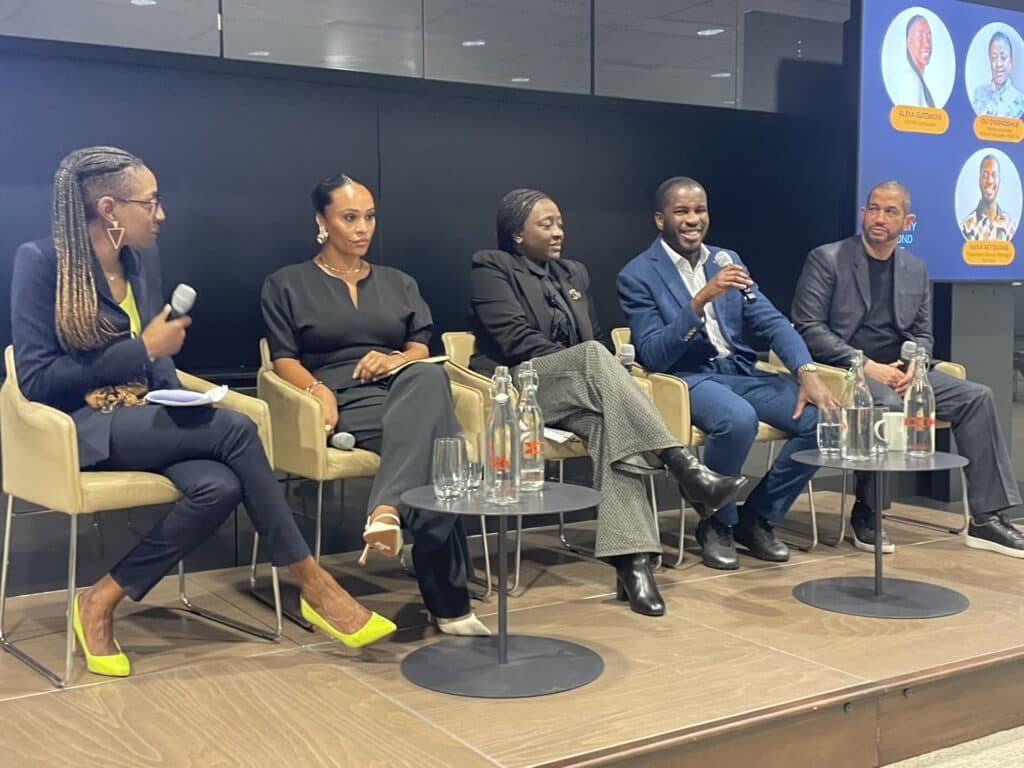
This was followed by a panel discussion, which covered personal branding while staying authentic and being intentional.
Panellists Ebenezer Bolatiwa, senior relationship manager at HSBC UK, Rosalia Lazzara, founder of Manuka Media, and Shiloh Robertson, marketing manager at Pepper Money UK, spoke about the ways to use different social media, standing out, engaging with people and transforming visibility into meaningful relationships.
Lazzara said everyone had a personal brand, whether they were aware of it or not, but people needed to make it visible. She said that during her career, sharing her journey and the different relationships she built were just as valuable as leading with expertise.
Bolatiwa said to target different messaging to the right social media platforms, as the wrong one could unintentionally attract the wrong people.
Robertson said people should engage with their audience and test different messaging but not be put off if a social media post does not gain a lot of traction.
He said: “Sometimes, it’s not about the volume, it’s about the quality of traction and engagement… it doesn’t need a massive audience, it needs a refined audience, who you resonate with.”
To protect wellbeing and social media, the panellist acknowledged that it was easy to always be online but advised allocating time to engage with an audience and being selective about where to be.
Being championed by others
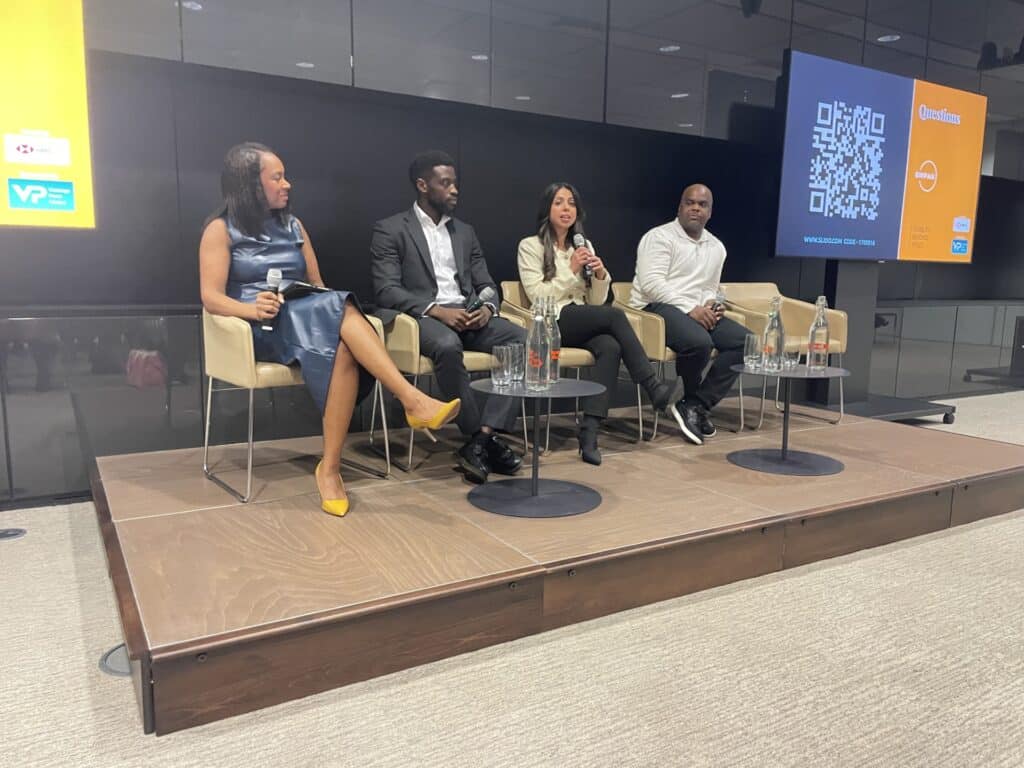
The next panel covered how individuals and organisations could create fairer and more intentional support for employees, with panellists Oli O’Donoghue, head of secured lending at HSBC UK, Paul Watts, founder of Lenuity, Nana Agyemang, proposition delivery director at Barclays, and Julia Ama, deputy head of HR at Market Financial Solutions.
Agyemang spoke of a time when visibility had a positive impact on him, when he was located at a bank branch in central London and saw that a fellow British Ghanaian woman was his branch manager.
“That gave me a lot of confidence because I realised if one of my own kin could be a branch manager, then it’s possible for myself,” he added.
Ama said people at the start of their career should not underestimate their presence in the office and make themselves known, rather than hiding behind a screen.
On the topic of having advocates or sponsors, O’Donoghue said the right sponsor should speak well of someone in their absence, but it was also down to the individual to network and show their own value.
Agyemang agreed and said sponsorship was not one-sided, so people should also ask others what value they could bring and be proactive with any mentorship programmes.
Watts said champions outside of the organisation a person works in were equally valuable, as this could be where career growth and opportunities come from.
“When you have connections and let them champion you within a different organisation, someone who could advocate for you… that creates opportunity,” he added, saying this had worked well for him in the past.
Gutzmore said every business opportunity had a person attached to it and getting recommendations from them could generate more leads.