
Chris Storey, chief commercial officer at Atom Bank, said: “This data represents the calm before the storm. Future data from the ONS will reveal the true impact of the conflict on house prices, and whether it has acted as a brake on the growth seen this month.”
The figures show an annual price rise of 1.2% in house prices across the country, which values the average property in the UK at £268,000.
Regional variation
The data shows that London is experiencing the biggest falls in prices, down 3.3% annually and 1.9% month-on-month. Meanwhile, the North East experienced the most significant monthly increase, with a movement of 2.7%, and Yorkshire and the Humber experienced the greatest annual price rise, up by 3.9%.
In Wales, house prices have risen by 0.3% since January 2026. An annual price increase of 2.5% takes the average property value to £210,000.
Your First Home: confidence to build
Sponsored by Halifax Intermediaries
Meanwhile, Scottish house prices rose 2.3% year-on-year, but were down 0.6% month-on-month.
Amy Reynolds, head of sales at Richmond estate agency Antony Roberts in South West London, said the business was seeing a “slight softening in viewing numbers as some buyers pause to assess the situation”. However, she added that the underlying market remains robust.
“The property market continues to demonstrate resilience despite a backdrop of global uncertainty. The Middle East conflict has contributed to increased caution across financial markets. Higher mortgage rates have naturally become a talking point among applicants.
“Serious buyers are still very much active, with second viewings continuing and sales being agreed at levels typical for this time of year. While there is greater awareness of cost, for the right property, committed buyers are continuing to move forward with confidence,” she added.
Flats see falls
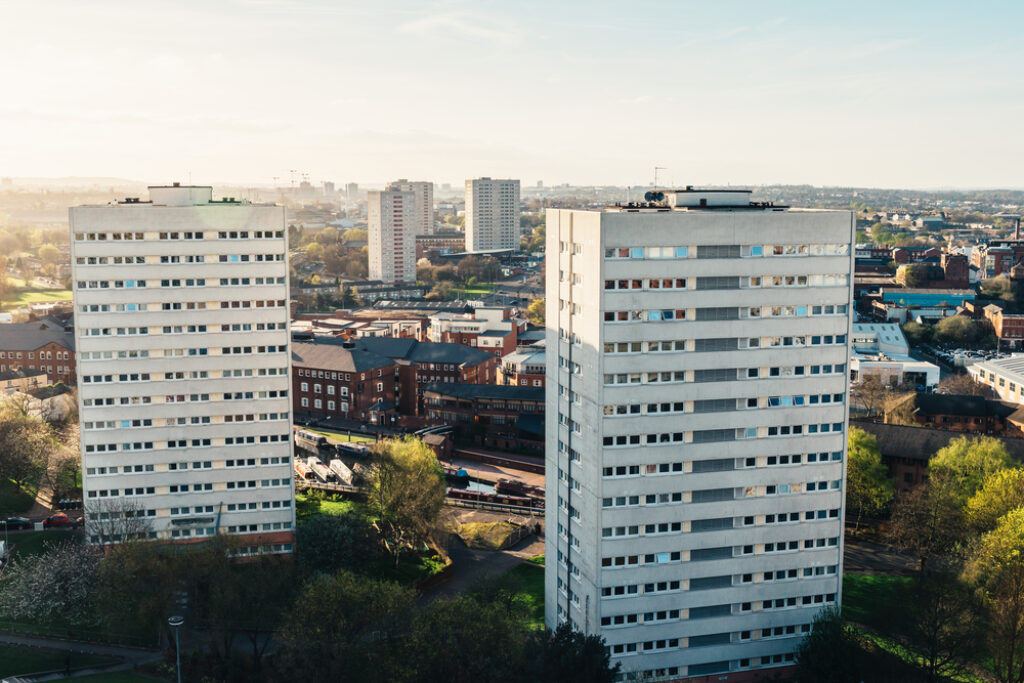
While prices are rising for other types of property, buyers selling flats are taking the brunt of any falls. The figures show that while semi-detached houses increase in price by 2.6% year-on-year, with terraced houses up 1.4% and detached houses 1.2%, flat prices fell 3.8% in the year.
In London, the fall was even more pronounced, with flats down 6.1%.
A ‘wait-and-see’ approach
Estate agents said that, since the eruption of war in Iran – which has pushed up mortgage rates – buyers have been more cautious, which will be reflected in the next set of house price figures.
Tomer Aboody, director of specialist lender MT Finance, said this has been exacerbated by lack of encouragement from government and no signs that the bank rate will fall.
He continued: “Lack of encouragement of any form from the government has fuelled further hesitation in both buyers and sellers, with many pausing and taking a ‘wait-and-see’ approach. With further reductions in base rate on hold, at least for now, and more stamp duty paid due to the lack of any concessions, there is little incentive to make a move.”
Ian Futcher, financial planner at wealth manager Quilter, said there were “tentative signs” that the worst of the mortgage rate spike may have passed, which could help with confidence.
He said: “In recent weeks, several major lenders have begun to trim fixed rates as wholesale funding costs have eased back, providing some marginal relief for borrowers. While rates remain well above February levels, pricing appears to have stabilised for now rather than continuing to rise.
“Even so, changes in mortgage costs do not feed through to house prices immediately. The sharp rise in borrowing costs seen after February is more likely to weigh on activity and sentiment in the spring and early summer data, particularly among first‑time buyers and more rate‑sensitive parts of the market.
“Looking ahead, the outlook for house prices will depend largely on how geopolitical risks evolve. If tensions ease further and energy‑driven inflation pressures recede, mortgage rates could continue to edge lower, supporting broadly flat prices rather than a sharp correction. If volatility returns, affordability constraints are likely to reassert themselves, leading to weaker transaction volumes and softer prices as the year progresses.”