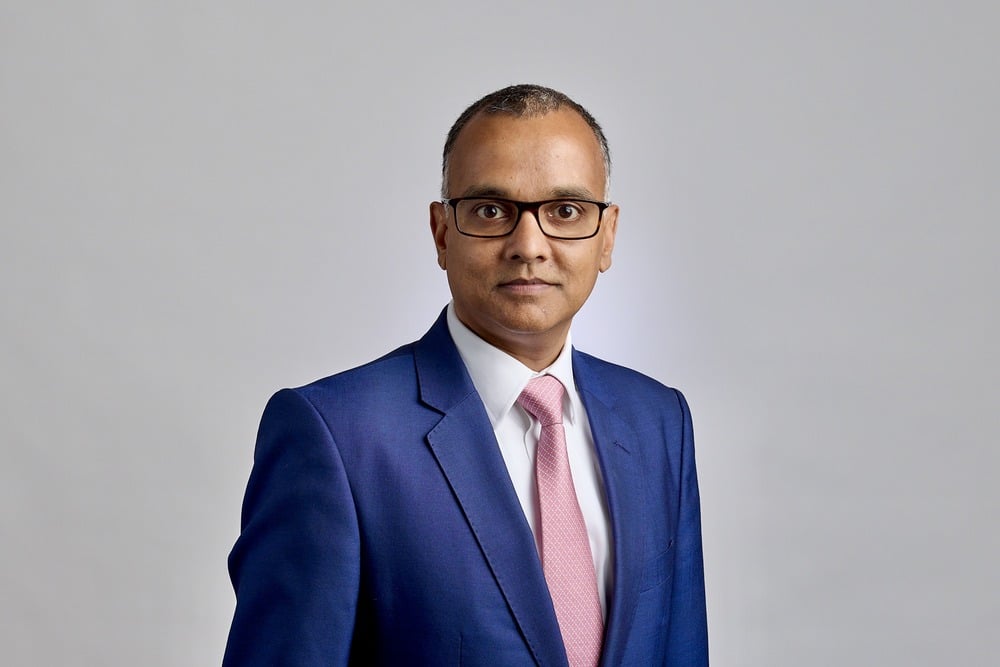

In conversation with Mortgage Solutions, Mayank Prakash (pictured) said that a year in to leading the mortgage and protection consolidation business, he found some similarities with the sectors he previously worked in.
Prakash has primarily worked in the financial advice and wealth management sectors, focusing on tech and ‘buy and build’ strategies.
Pivotal has acquired 25 firms since launching in 2021, and Prakash said the group would “continue to drive organic growth”, which is currently 2-3 times faster than the rest of the market.
“We will continue to do acquisitions. We’re incredibly lucky that we have 25 entrepreneurs in the business and every one of those colleagues are Pivotal partners, because it’s about us together as a partnership succeeding.
“Those Pivotal partners recommend Pivotal to all of their friends and their network. Our M&A pipeline is oversubscribed by six times the M&A that we are going to do,” he noted.

£2.5m paid to help broker clients benefit from greener homes
Sponsored by Halifax Intermediaries
Prakash said this was a lucky position to be in, adding that the reason the group was selective about its acquisitions was that it had so much choice.
An entrepreneurial nature
He said Pivotal had built a “great culture”, and while the performance of a firm mattered when seeking acquisition opportunities, values were also of importance.
“We will either accelerate acquisitions within our pipeline or slow them down, depending on the culture. We definitely look for [business] leaders that fit with our people-first mindset,” he added.
Pivotal vets businesses on four values: “How entrepreneurial is the culture? Does everyone behave like an owner? Secondly, our collaborative culture – do people achieve things together? Thirdly, how curious is their culture – are people up for learning? And lastly, do they want to do better than ordinary? Do they aspire to be exceptional?
“Those are the four cultural values that we hold dear that define what we collectively stand for,” he added.
When asked if the recent buyout of two specialist advice firms indicated where Pivotal was focusing its strategy, Prakash said the group was on a “long-term acquisition and consolidation spree”, and its last consolidations should not be used as an indication of its strategy.
“We will make acquisitions in every segment of the market, every channel of the market, and we’ll make them at pace,” he added.
Ambitions to span the whole market
The group aims to cover the whole of the market and to build its proposition to every product, client and channel. Pivotal will remain “anchored in mortgage, protection and insurance” and associated services such as wills, conveyancing and legacy planning, with the potential to partner with estate agencies and wealth firms.
“While they’re connected from a client perspective, they’re very different businesses with different capital structures and drivers what makes them successful. Focus is what makes a business successful – the best estate agency is not going to be offering the best mortgage advice, so we’ll partner with them rather than try to become an estate agency,” he added.
Prakash said the support Pivotal gave to each firm depended on how they operated, but the “culture of Pivotal partners coming together and supporting each other means they naturally talk together, share expertise and that helps them grow and be better together. That, invariably, is the top reason why businesses are very keen, it’s that culture of partnership.”
Pivotal hosts regular partner conferences, which Prakash said were always its most oversubscribed event “because people enjoy exploring what we can do together”.
Prakash said owning a business as either a directly authorised (DA) firm or appointed representative (AR) could be “very lonely” and increasing regulatory guidance as well as the need to navigate new technology presented difficult challenges. He said the ability to share expertise was “huge” as partners did not have a vested interest, adding this was not present within a network, where business leaders could be friends but also in competition.
Prakash is not singlehandedly driving the business – he said its leadership team comprising Jeremy Gibson, CFO, Nneka Orji, chief operating officer, Grant Leci, head of M&A, and Charlie Crossfield, chief technology officer, and commercial leaders like Phil Gray was “the best-in-class team in the sector, and their impact will show in the next few months, quarters and years”.
“We are enjoying the journey,” Prakash said.
Looking ahead, Pivotal wants its purpose to be evident, with the group on track to reach one million clients by the end of the year. Prakash said: “We want to be known for being trusted by the clients we work with and make a tiny contribution towards achieving their life goals”.
Led by technology
Unlike the other firms Prakash has worked for, the mortgage and protection sectors have been slower to prioritise technology – namely artificial intelligence (AI) and machine learning – but Prakash said this was “why it was exciting for me to be here and transform this market”.
Prakash is on the boards of Uber and IT services provider Softcat, which are very tech-centric. He said it had been “easy to drive” some of the technological developments at Pivotal, such as the implementation of a supervised machine learning model, which screens calls, and an AI ‘second brain’ adviser called Jarvis, that supports the group’s intermediaries.
Jarvis recently passed CeMAP and is being tested every week to ensure its proficiency.
Prakash said: “How lucky are we to be at this point in time? Five years back, we did not have AI-native architecture as an option, and five years from now, it will be too late.
“The reality is, we don’t have a legacy stack, so we are building an AI-native architecture.”
Still, Prakash said the group’s clients were people, not agents and “people trust people”.
“The best way to offer real advice that makes a difference to human lives, helps them unlock the code that matters for them… people connect with people and that is what advisers add,” he added.
He said advisers could use AI to support their expertise and advice, delivering it to clients faster.
Pivotal launches and scales up a new technology function “almost every week”, Prakash said, which he said was the fun part of having a business that was tech-led at its core.
The group has 1,200 colleagues and will near £15bn in lending this year, Prakash said, “so we are operating at a national scale but in many ways, like a tech start-up”.
When asked how advisers were responding to Pivotal’s plans around technology, Prakash said he was not surprised to see colleagues, including advisers, be excited about technology and the group had “seen that excitement show up in [adviser] engagement”.