
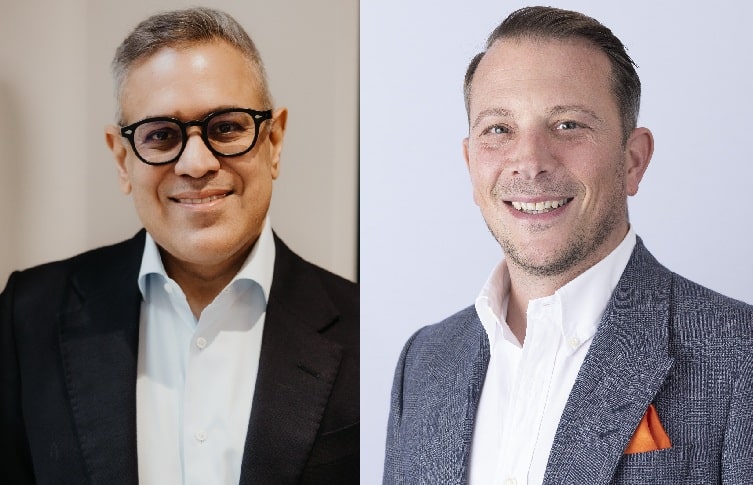

Both Timmins and Bilgrami were keen to emphasise that the acquisition is the culmination of a relationship developed over many years.
Having worked closely together through partnerships and integrations, including Fintel becoming a minority shareholder of Mortgage Brain in 2024, both believed the combination of the businesses creates an opportunity to address one of the biggest challenges facing advisers today: fragmented technology and disconnected workflows.
“We’ve been working with Mortgage Brain for over two years now,” Timmins explains. “We’ve had a deep partnership and engagement with the business, and we believe that the Mortgage Brain set of solutions and software is first class, stands out the best in the market, and is the solution advisers are choosing to use, day in, day out.”
The acquisition filled what Timmins described as a “material gap” in Fintel’s offering.
“We provide software and data to around 20,000 intermediaries in total. We are well practised at providing software and workflow solutions out to the intermediary market. But there has been a material gap in our offering, and that has been around mortgages.

Better technology, built around brokers
Sponsored by Halifax Intermediaries
“We’ve spent the past five years scouring the market to see what we think is the best technology solution out there, and additionally built a much deeper understanding of the way in which Mortgage Brain operates over the past two years.”
For Bilgrami, who will now take on responsibility for Fintel’s enlarged software and data division, the move was less about finding a buyer than finding the right long-term home.
“We’ve been working closely with Simplybiz and Fintel over the past couple of years, so this is by no means a leap into the unknown. On their side, Timmins and the team have seen our strengths in data and distribution and the artificial intelligence (AI) capability we’ve built in-house.
“I think that will be of huge benefit to customers more broadly, not just our current customers, but more broadly of Fintel’s customers going forward. It’s highly additive to the solutions that Fintel has.”
A common culture
Bilgrami added that the cultural fit between the businesses had been an equally important consideration in the deal.
“One of the real positives is that there is a similarity in the culture with the software and data division within Fintel. I think there’s quite a big overlap in terms of the way in which we operate.”
That alignment extended beyond culture into a shared vision for the future of adviser technology. Timmins believed advisers, particularly firms operating across both mortgage and wealth markets, have been underserved by disconnected technology ecosystems.
“For a long time now, the mortgage market and the wealth market have operated in very different swim lanes,” he says.
“It shouldn’t be the case that mortgage technology is only available to mortgage firms and wealth technology only available to wealth firms, and the two don’t integrate or work together seamlessly. I believe that’s something we will materially change as we move forward.”
The acquisition therefore sat naturally alongside Fintel’s wider technology strategy.
Within the software and data division, initiatives such as Project Unity were already focused on bringing together CRM, workflow, and adviser technologies. Timmins viewed the acquisition of Mortgage Brain as a critical extension of that work.
“I see the ability for us to create a really connected platform across technology for all intermediaries, and the integration of Mortgage Brain with what we’re doing in our software and data division will be a further extension of the support we can offer to mortgage firms and multidisciplinary firms.”
While connected workflows are one side of the opportunity, data and AI sit at the heart of the other.
A technological transition
Bilgrami argued that the speed of technological change makes predictions difficult, but believes the combined organisation occupies a unique position.
“Nobody can predict the future. Look at how far things have moved just in the past 12 months. But I think bringing together our businesses and the proprietary datasets that we have places us in a unique position in the UK retail financial services space that allows us to build really capable, agentic solutions that are used by intermediaries, but also the end consumer. The data is really the key.”
Bilgrami believed many firms underestimate the importance of data quality when discussing AI.
“People forget that when they use AI. You get really awful results that sound really confident if you type in simple research into ChatGPT or Claude or wherever else. But if you give it the right sourcing or the right research data, you get phenomenal solutions.
“Really, there is nobody else out there that has the combined dataset that we do when we bring the two businesses together.”
Both leaders emphasised that AI’s role is not to replace advisers, but to make them more effective.
Timmins points to Fintel’s decades of experience in compliance, arguing that industry expertise is critical when developing practical AI solutions.
“The best businesses to create AI solutions for their clients are those like Fintel and Mortgage Brain that have a deep understanding of how file checks, for example, have worked on a manual basis for the past 20 years.”
Bilgrami shared that view.
“We are an absolute believer in having a human in the loop,” he says. “The AI check should triage work. It removes all the manual-ness or the lower-value tasks, so it massively improves the efficiency of the experience of file checking.
“However, what it doesn’t do is make a judgement. You need a human in the loop, and that human needs to be the orchestrator.”
More broadly, he saw technology’s role as enhancing the adviser-client relationship, rather than replacing it.
“The role of technology is to make that intermediary more efficient. What it isn’t is to create a barrier between them and their end customer.
“I think it’s the role of technology in the future to amplify the humanness of the individual because that’s what’s going to set them apart from automated journeys. The technology needs to support the efficiency, almost make that intermediary bionic in order to help them serve their customer.”
Maintaining continuity
For existing customers, both Timmins and Bilgrami stressed that the immediate priority is continuity.
“We don’t expect our existing customers to see any immediate change to anything, really,” says Bilgrami. “It’s business as usual.”
At the same time, both acknowledged that the additional resources available through Fintel should create longer-term opportunities.
“Our constraint isn’t really around winning new customers,” Bilgrami noted, “but around our capacity and our expertise.
“Although on the first day of completion customers won’t feel this, I’d like to think in six months or a year’s time that we will see the fruition of our new position as part of Fintel.”
Timmins agreed, highlighting the broader resources now available to the business.
“The current roadmap and method of delivery for the customers of Mortgage Brain will not change. In fact, Zahid and the team will find a greater level of investment from Fintel into the products and solutions they offer.”
The transaction also marked Bilgrami’s return to a business he knows well, having previously led Defaqto, part of the software and data division before leaving to join Mortgage Brain five years ago.
“We are delighted to welcome Zahid back to Fintel,” says Timmins. “We know the material effect he had on growing Defaqto, and I know he’ll bring the same qualities back to the wider software and data division.”
For Bilgrami, the move represented both a continuation and a homecoming.
“I’ve had a phenomenal last five years at Mortgage Brain. I think we’ve made huge strides in taking the business forward.
“But in addition to that, I feel as if I’m also coming home. It’s the combination of an excellent last five years, and the excitement of coming back to a business with which I’m very familiar.”