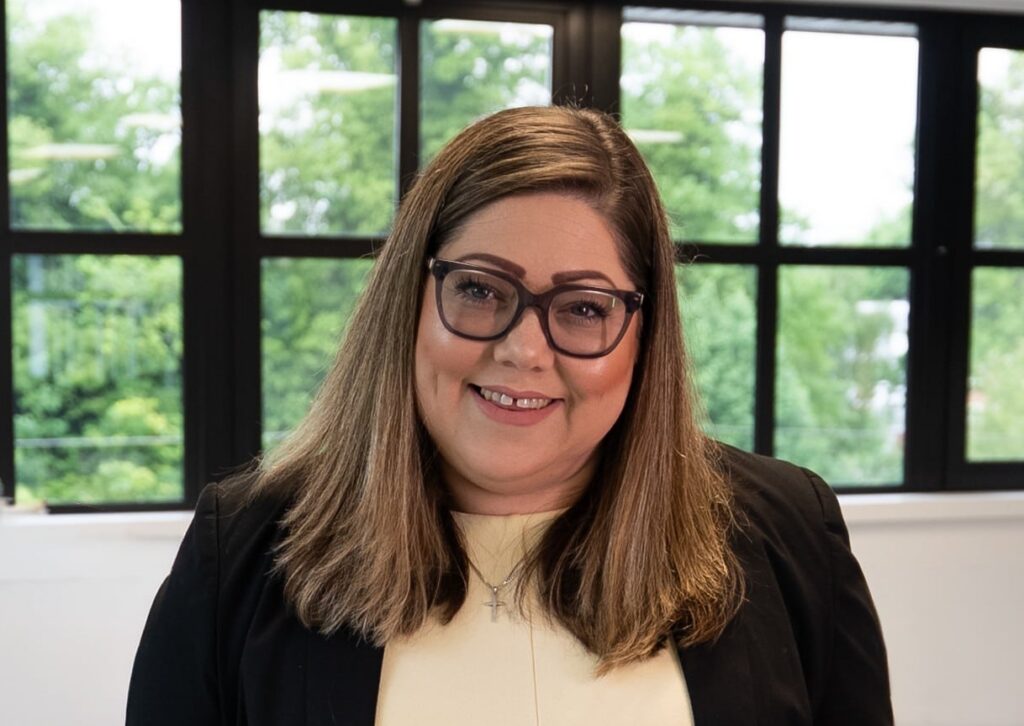

Which locations and how many advisers and broker firms do you cover in your role at Tab?
I’m based in Southampton and my patch is the South of England, covering everywhere from Plymouth, Exeter and Taunton to Bristol, Salisbury and Portsmouth – and all the way across to Guildford, Redhill and Brighton and Hove. From Swindon, Reading and Bath down to Bournemouth, Poole and Torquay on the coast. It must be more than 10,000 square miles – including the whole of South West England, other than the Gloucester postcode. How many brokers do I look after? Maybe 600 – with the largest number being in Southampton.
Tab is on a mission to bring momentum to lending and I want every mortgage and commercial broker in the UK to know who we are, what we do and how we can help. I’m always looking to build new relationships.
What personal talent/skill is most valuable in doing your job?
Problem-solving. Every case is different. The answer isn’t always obvious. You need to understand what a broker or a borrower is trying to achieve, identify what’s holding the deal back and then work out what you can do about it. As a firm, I’d say we’re good at that. It means constantly asking the right questions, sometimes challenging the answer and always being prepared to look at a case from a different angle.
That’s particularly important in specialist finance. If you just look at a case against a standard set of criteria, you’ll rule out opportunities that could actually work.
Episode 5: Larger Loans and Complex Lending: Powered by Partnership podcast from Newcastle for Intermediaries
Sponsored by Newcastle for Intermediaries
At Tab, we have a real appetite for finding solutions. My job is to take that approach into the broker market, understand the problem and find a way to get the deal moving. Once you have all the details, you can get on with it and deliver, for example, commercial mortgages at bridging speed.
What personal talent/skill would you most like to improve on?
Switching off. My job as a BDM is not just to find new business. It’s to listen and problem-solve, to remove barriers and get deals done. That can become a bit all-consuming.
What’s the hardest part of your job?
The hardest part is getting the chance to have that initial conversation. Brokers have long-established relationships with lenders and BDMs. They’re dealing with dozens of people competing for their attention, all saying they have the right product, the right service or the right answer.
You have to earn the opportunity to show them what you’re made of.
After I have got my foot through the door, I’m confident Tab can help with pertinent commercial mortgages or bridging products – and particularly when a case is more complicated or needs a different approach.
That’s why I value opportunities to talk directly to the broker community. It gives me a chance to explain how I work, what Tab does and where we can add value.
What do you love most about your job?
Solving problems. I am very solution-orientated and that’s what I love most about the job. I get to help brokers and property investors structure deals, find solutions and get deals over the line. Perfect role for me!
Are there any misconceptions about your job/role?
Some people still see BDMs as salespeople. I don’t like being pigeon-holed like that. I am a mortgage professional with deep industry expertise in specialist lending, commercial mortgages and the bridging space. I help brokers solve problems and grow their businesses. I add a lot of value. I am not someone who just calls when they have a new product to sell.
What’s the best bit of career-related advice you’ve been given? Who gave it to you?
Master your product, then become genuinely useful. I was taught to know my lender’s offering better than almost anyone else – criteria, exceptions, service standards, appetite shifts – and become the person brokers ring when they’re unsure. Knowledge builds trust faster than charm. But that’s only the first part. The second is to help brokers do their jobs more easily and profitably – not to ‘sell’ products. So, ask questions. Understand pain points like criteria quirks, service levels and turnaround times. Then solve real problems for them. Brokers who feel you make their life easier will give you business for years.
What has been the biggest lesson you’ve learned in your career?
The biggest lesson I’ve learned is that relationships outlast products.
Early in my career, I spent too much time selling the rate, the criteria, the speed, the maximum loan to value (LTV). Those things matter, of course they do – introducers need competitive solutions. But the brokers who keep coming back year after year, the relationships that survived rate cycles, shifts in lender appetite or economic wobbles – they weren’t coming back because I was waving the cheapest product on the day.
They came back because the broker trusted me when things got complicated.
I’ve seen brilliant criteria packages lose market share because the BDM team was unreliable or oversold. And I’ve seen average product suites win solid volume because brokers knew that when a case was tricky, or the valuation was soft, or the credit committee pushed back, that BDM would still pick up the phone and fight for them.
The real job isn’t introducing a product. It’s becoming the person a broker wants to call when they need a straight answer, when a case is on the edge, or when they’re under pressure from their own client. It’s about trust. Everything else is temporary.
Protect the relationship even when it costs you a short-term deal. That’s the lesson that took me longest to properly understand – and the one that’s been worth the most.
How do you keep up to date with developments in the market?
I gain the most insight into the market from talking to brokers – you learn a huge amount from the problems they’re dealing with every day and the changes they’re seeing across their client base. I also keep up with industry news, with Specialist Lending Solutions and Mortgage Solutions being my go-to publications; I am obviously an avid reader.
What is the most quirky/unique property deal you’ve been involved in?
I’ve done so many. It’s hard to pick out just one. Commercial mortgages on houses in multiple occupation (HMOs), multi-unit freehold properties, holiday lets and Airbnbs, warehouses, industrial units, shops, pubs, student accommodation. I suppose one stands out: a hotel that was a bit quirky but income-producing. Other lenders didn’t like the scenario, but we were able to take a commercial view.
Tell us about your trickiest case – what happened and how did you resolve the problem(s)?
A broker came to me asking for help on a case that had been declined at legals elsewhere. There was an issue on the building regs. While the previous lender wouldn’t proceed, we were able to take a view. It was tricky, as building regs are a standard requirement for most conversions. But we conditioned the security docs so the buyer could obtain these within six months of purchase. This showed me how flexible, pragmatic and accommodating that Tab can be.
What was your motivation for choosing this career?
I didn’t choose this career because I loved mortgages. I chose it because I loved the people who do them.
I started out thinking I’d be good at sales. What I discovered was that the real satisfaction wasn’t in hitting a target or placing a deal: it was in becoming the person a broker relies on when the pressure is on. When a case is complicated, when the original lender has wobbled or when the client is stressed.
That feeling of being useful – of solving a real commercial problem for someone who trusts you – is what hooked me. The product knowledge, the market awareness, the networking… all of that is just part of your arsenal. The reason to fight the battle is always the relationships.
If you could do any other job in the property sector, what would it be and why?
If I could do any other job in the property sector, I’d be a specialist underwriter – ideally one who still had regular contact with the intermediary market (which is how the underwriting team at Tab works).
Why? Because the best underwriters don’t just assess risk; they understand the real story behind a deal. They can see the commercial logic, the exit, the people involved and still protect their lender’s position. That combination of commercial judgement and technical discipline is where a lot of real value sits.
I’d still want the human element and I think credit analysis alone would bore me. The ideal version would be an underwriter who was in direct contact with brokers, explaining decisions and helping shape applications. That way, you still get the relationship side that made me love the BDM role in the first place – but with more direct control over the credit outcome.
What did you want to be growing up?
I wanted to be a barrister. I liked the idea of being the person who could walk into a complicated situation, understand all the different sides of it and then build the strongest possible argument.
Looking back, it probably wasn’t such a strange choice. I’ve always enjoyed getting to the bottom of a problem, asking questions, working out what really matters and then making a case for the right solution.
I didn’t become a barrister, obviously. But many of those instincts followed me into financial services. The cases I enjoy most are the ones where there isn’t an obvious answer and you have to work hard to find a way through.
Where do you see yourself in five years?
I don’t know. Tab is growing at a ferocious rate; there’s a real energy and pace in the business and I want to be a major part of its future success, whatever my role or position looks like in five years’ time.
If you could have one superpower, what would it be?
The ability to know exactly what people are thinking. Not for sinister reasons. It would save me a lot of time!
As a BDM, you’re constantly trying to work out what someone really needs, what’s holding a deal up or what they’re not quite saying.
If I could read minds, I’d know straight away what the broker was thinking, what the client was worried about and what the credit team was going to ask before they even asked it. I’m naturally quite curious anyway, so I’d probably use it for everything. Although, I suspect my family would stop speaking to me if I could read their minds as well.
What do you do to unwind?
I spend time with my family. We are actively involved in our local Scouting group, so weekends are often spent preparing for or attending Scout events.
What is your greatest skill(s), either work- or non-work-related?
Probably organising people. I’m one of those people who can’t help turning a vague idea into a plan. Give me a group of people, a date and something that needs organising and I’ll have everyone where they need to be and know what they’re doing.
That probably comes from having kids. Between family life, activities and everything else that goes on, you get very good at making things happen when there are a lot of moving parts. I also think I’m good at getting people involved. I like bringing people together and making sure everyone feels part of what you’re doing.
And finally, what’s the strangest question you’ve ever been asked?
It was in a job interview and they asked: “If you were an animal, what would you be and why?” I think most people go for something impressive like a lion or an eagle. I said a border collie. They’re energetic, intelligent, persistent, excellent at bringing people together and they don’t stop until the job’s done – which, if I’m honest, sounds suspiciously like being a really good BDM. Anyway, I got the job, so it was the right answer. Or the interviewer was just very keen on dogs.