

Research from Savills, conducted with Insight Advantage, showed that while the majority of first-time buyers received family support in the form of gifts, loans or inheritance, 64% still put their savings towards homeownership.
Outright gifts were the most common form of support, with 32% receiving financial help from family in this way, compared to 16% who benefitted from family loans.
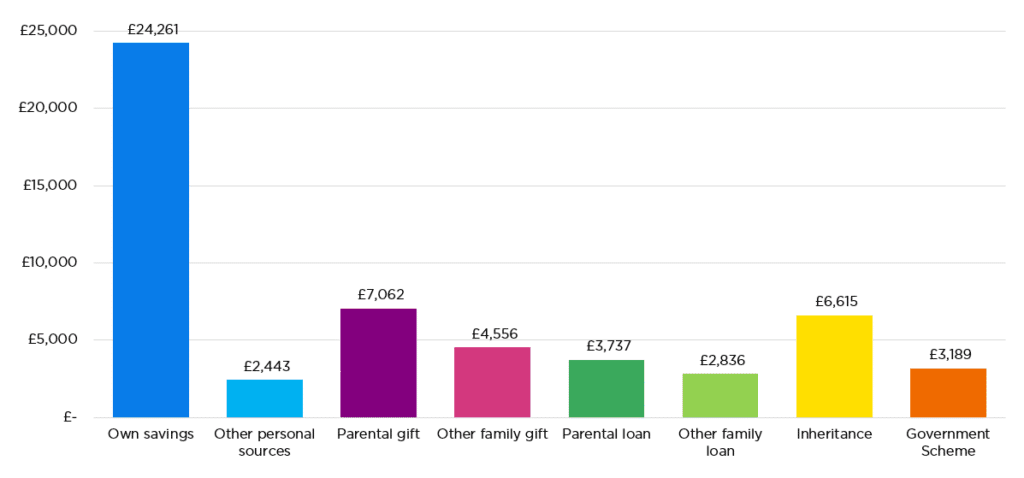
Source: Savills using Insight Advantage, the Regulated Mortgage Survey and BoE
Where first-time buyers are getting help from
Financial help did not come from parents alone, as nearly half of first-time buyers reported receiving support from other family members.

Episode 5: Larger Loans and Complex Lending: Powered by Partnership podcast from Newcastle for Intermediaries
Sponsored by Newcastle for Intermediaries
Further, 14% of first-time buyers drew on inherited wealth, a larger share than the 12% who used government buying schemes.
Savills found that the average first-time buyer used £24,261 of their own savings to buy a home, accounting for 44% of the typical deposit towards a standard first-time buyer home. This suggests the remainder of the deposit comes from a variety of sources.
Lucian Cook, head of residential research at Savills, said: “First-time buyers continue to feel the impact of higher mortgage rates, which has stretched affordability and kept the average deposit high and maintained a reliance on the so-called Bank of Mum and Dad.
“While first-time buyer activity held up better than expected in the early part of the year, the outlook remains challenging in the current interest rate environment.”
Cook said less stringent mortgage regulations and the gradual easing of rates should also broaden access to homeownership.
He added: “While that will pave the way for more lower deposit mortgages, it’s clear that family support will remain a crucial component of getting first-time buyers on the housing ladder.”
Younger buyers receive the most support from families
The research showed that younger first-time buyers were more reliant on financial support, with 63% of those aged 20-24 relying on some form of assistance, compared to 44% of those aged 45 and over.