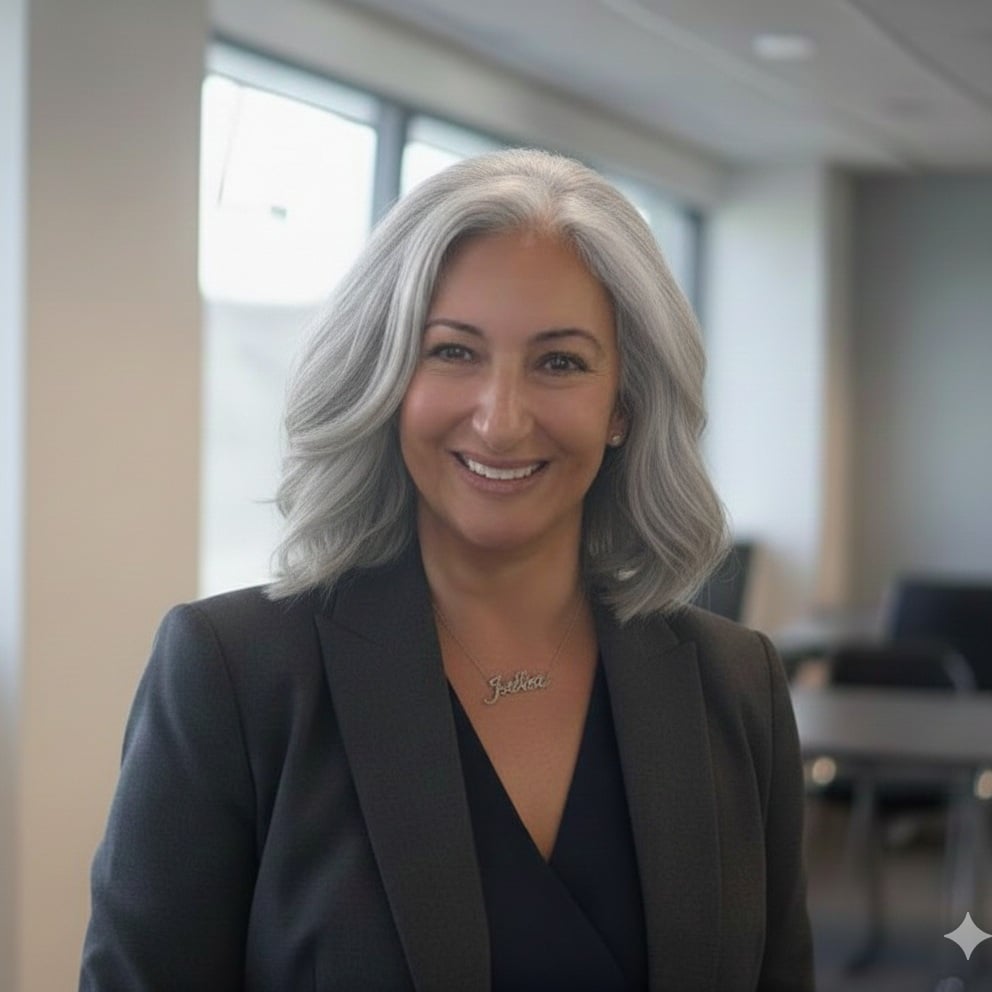

Over the last three years, the OPDA has been instrumental in advocating for improvements to property transactions through digitisation and data sharing.
Harris said she was “genuinely delighted” with the government’s formalised plans to reform the process, as it was “everything that we had campaigned for, for the last five years”, including two years of work with the Home Buying and Selling Council and three years through the OPDA.
She said the plans were centred on the customer experience, which Harris has always felt needed improvement. Harris added: “It needs to be better, but for the consumer, we can’t keep having this home buying journey the way it is.”
She was also pleased with how many people engaged with the consultation, as around half of the 1,100 responses came from consumers, providing a “strong voice” from both real people and organisations.

Your First Home: confidence to build
Sponsored by Halifax Intermediaries
An early idea
Harris truly started championing the idea of cross-sector data sharing as a founding member of the UK’s first digital bank, Atom Bank, in 2014. Here, Harris also helped to create the first digital mortgage, which went live in 2016 and coincided with the introduction of open banking.
It was here that Harris realised the possibility of getting a fast, secure mortgage offer and accessing payments and current accounts through open banking, and questioned why other parts of the home buying process continued to be done manually.
Then, in 2021, the government’s Home Buying and Selling Council asked Harris to look at what data should be made available at the start of a property transaction. This work was done over two years with 150 tech professionals to determine what was needed, any gaps and possible challenges through proof of concepts and beta testing.
Eventually, it was decided that someone needed to lead the initiative to deliver data and technical standards, trust and governance, resulting in the establishment of the OPDA three years ago.
A sector playing catch up
Harris’ career from the corporate travel sector to mortgages has given her limited interaction with the government, but she said it was a “lovely experience” to do this through the OPDA.
Her work history taught her that the concept of data sharing and standards was not new, as she saw this in practice while working in the travel industry in the 90s.
“To prove that those standards are replicable across another industry is great,” Harris said.
She said the housing sector was coming from a “very immature starting point” in terms of the data shared and digital capability, adding: “The way that we work together and join solutions up from a customer-centric point of view, it’s just not like anything I’ve ever seen before”.
Harris said: “We’re very, very far behind other industries. We’ve got a lot of technical debt and lots of very embedded ways of working, manual processes and things that live on paper that just really are not fit for purpose.
“We’ve got a lot of groundwork to do to get people ready for this.”
Buy-in from all professionals
The endorsement from the number of major companies that have joined the OPDA and taken part in testing programmes provided reassurance, Harris said, while evidencing the possibilities of different organisations working together to make a tangible difference.
Harris showed appreciation for the OPDA’s members, saying they were “committed, give lots of time, energy and real thinking”, but said wider involvement across different sectors could be better.
“The reality is that this concerns every single part of the home buying and mortgage process. Everybody needs to be doing this, from estate agents, mortgage intermediaries, mortgage lenders, valuers, surveyors, conveyancers, and all of the technology providers who work in those industries and provide solutions.
“All of these people should be in this conversation, and they’re not. So, while the engagement from our members and stakeholders is everything we could ask for, it’s just not big enough. We need everybody to come and join in,” she noted.
Harris said the government’s smart data scheme would be fully operational and mandated by 2030, in accordance with this being delivered before the end of this Parliament, giving the sector a “small window of opportunity to be part of a once-in-a-century change”.
Professionals do not need to know all the technical details, Harris said, but urged they read the government’s roadmap, as aspects such as giving people the legal right to access data that can be safely and securely shared between parties would bring in mandatory standards for everyone working in the industry.
“[Those standards] are all going to be higher than they are today, and all of those things are already committed,” Harris said, with the reminder that some elements of the roadmap for reform come into force as early as this year, such as non-statutory guidance to improve the quality of property listings.
She said there had been valuable input from the OPDA’s two founding members, Atom Bank and United Trust Bank (UTB), along with active engagement from the likes of Lloyds Banking Group (LBG), Nationwide, and NatWest, but she wanted intermediaries to “be informed and have the right advice when they need it”.
Mortgage Advice Bureau (MAB) and L&C Mortgages are members of OPDA, and Harris said this was “great” but urged better engagement from mortgage clubs, networks and advice firms.
Harris made a call to action, saying there needed to be more intermediaries in the room.
True collaboration key to get ahead of the deadline
The OPDA was established to ensure collaboration involved all stakeholders and multiple sectors that did not usually work together to “coalesce around the customer transaction”.
She said the process needed to be interoperable, and property was such a unique use case because people needed to share their identity, finance, property and energy data for one transaction – “that makes us a really unique use case because we sit at the perfect heart of the Venn diagram”.
“When we talk about the need for things to be interoperable and federated, which means that they work not just up and down, within your own circle, but they work sideways as well. It’s our job to make that collaboration happen and to make sure there’s alignment,” she added.
Harris said: “OPDA is a not-for-profit trade body and one voice where people can come, get involved and see how it works in a safe environment, through a sandbox where they can work with it and test it and see what it looks like and feels like before they do the work in their real-life systems.”
The commitment to mandation and secondary legislation is clearly set out and “coming very quickly”, Harris warned, and said firms must start embedding this into their business practices, because it was not just about the technology, but the behavioural change of how the industry operated.
Just the beginning
Harris said that for the Home Buying and Selling Council and the OPDA to have made their initiatives operational and functional within five years was “ambitious, bold” and showed that the concept was “ultimately doable”.
She said it was an “amazing first step, but the first step of many”.
Now that the roadmap has been published, the OPDA has a project plan with the Ministry of Housing and Digital Property Market Steering Group to work on not only data and technology, but governance, regulation, policy and consumer protection liability models.
A longer-term sandbox to test standards will also be set up, and then the OPDA needs to contribute to the secondary legislation to say what needs to be mandated.
The OPDA currently has a minimum standard of trust regarding the sharing of data, allowing its members to self-accredit, but plans to introduce a formalised accreditation structure so firms can show they are meeting new standards before they are mandated through legislation.
“We’re going to be busy for the next three-and-a-half years getting all of that done,” Harris added.