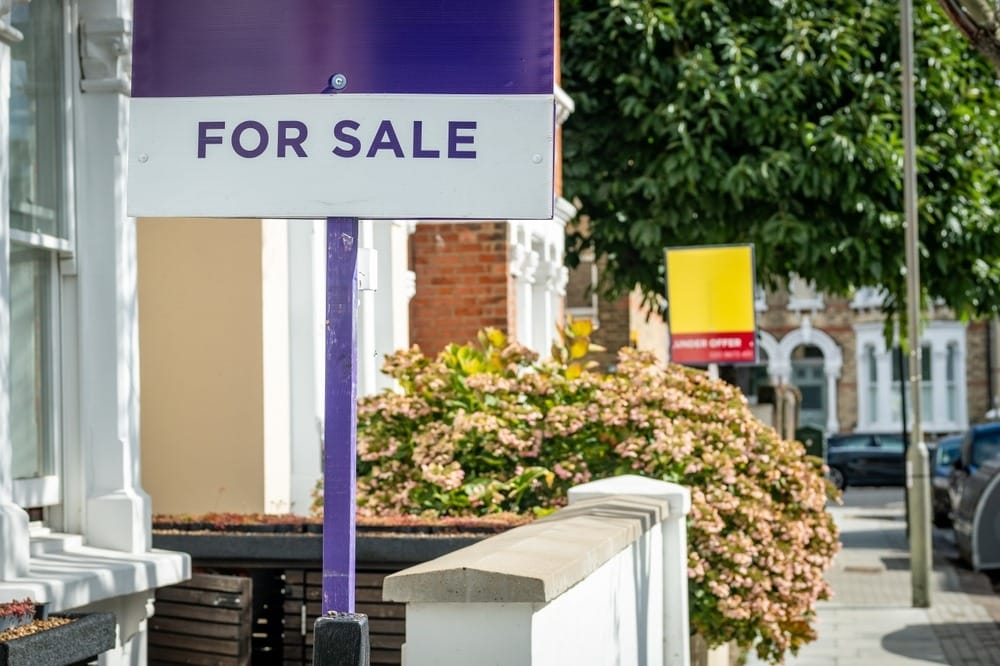

Rightmove’s house price index suggested that despite the standstill in asking prices, the record rise seen in January meant this was still the strongest start to the year since 2020.
The firm found that asking prices have gone up by 2.8% since December.
Rightmove said price growth had been “front-loaded” into January, as confidence returned to the housing market after uncertainty around the Autumn Budget. However, the high choice of homes for sale and easing buyer activity have prevented a February rise, the firm added.
It said asking prices held up in February, but sellers refrained from any further increases as competition stayed at an 11-year high and buyer activity was quieter than at any point in 2025.
The number of newly listed homes was 1% down on the same period last year, but 11% higher than two years ago. Additionally, the number of sales agreed was 5% lower than in 2025 but 9% up on 2024.

Industry, not regulation, must lead later life lending change
Sponsored by Suffolk Building Society Intermediaries
Colleen Babcock, property expert at Rightmove, said: “Virtually flat prices in February really needs to be viewed alongside what happened in January. After the prolonged uncertainty in the run-up to the late November Budget, plus the usual Christmas slowdown, we saw activity pick up again from Boxing Day. Many sellers, some of whom had been holding back because of the Budget, came to market in early 2026 with renewed confidence, which helped to drive that bumper January price rise. But the market fundamentals haven’t changed.
“There are still lots of homes for sale, and buying activity isn’t as strong as this time last year, when many buyers were rushing to move before the stamp duty increase in England. So in February, sellers have taken a more cautious approach by holding on to January’s gains rather than pushing prices higher, at a time when competition is high and the market is still very price-sensitive.”
An asking price stalemate
Jeremy Leaf, North London estate agent and a former Royal Institution of Chartered Surveyors (RICS) residential chair, said: “When the increase in demand just about matches the increase in supply, the result is stalemate. Prices are not really moving.”
He said the data reflected asking prices, not values, so determined “whether genuine interest is attracted”.
“However, caution remains not just as a result of more choice but continuing economic and political uncertainty, so, looking forward, steeper price rises are unlikely – at least for the time being,” Leaf added.
Tomer Aboody, director of MT Finance, said more stock coming to market was “inevitably keeping prices in check” but the mood in the housing market was more buoyant.
Aboody added: “With the prospect of further rate reductions, we are hoping to see increased activity in the form of more transactions as the year pans out. Lower mortgage rates will help but may not be enough on their own – encouragement from the government in the form of another stamp duty concession or some form of assistance for first-time buyers may be required to boost activity in a meaningful way.”
Hamza Behzad, business development director at Finova, said that following last month’s “record-breaking figures”, the momentum was “being sustained rather than fading”.
However, he added: “The real driver is likely to be confidence – shifts in sentiment and investor appetite are far more likely than a sudden or dramatic price correction.”
A buyer’s market
Rightmove said it was already looking like a good year for buyers, due to improved affordability and greater choice. Further, average earnings have outpaced the last three years of cumulative property price growth, up 4.7% year-on-year compared to a 1.5% increase in asking prices.
The firm’s mortgage rate tracker showed that the average two-year fixed rate was now 4.28%, significantly lower than the average of 4.96% a year ago.
Babcock said: “2026 is shaping up to be a good year to buy. Over the last three years, average wages are up by around 17%, significantly outstripping property prices, which are up by just 1.5% over the same period.
“A more favourable mortgage rate and lending environment are both also helping to improve buyer affordability. For those who are ready to move soon, February could offer a useful window of opportunity to act before the peak spring selling season, when prices usually rise.”