The February Diversity and Inclusivity Finance Forum (DIFF) podcast continued the discussion on neurodivergent people in the workplace, following the one held at the in-person event at the end of last year.
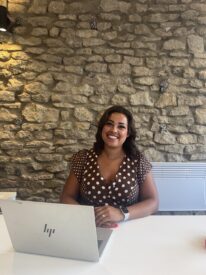
Nicola Alvarez, senior manager of mortgage distribution – proposition development at Accord Mortgages, said product design, advice, and how a financial services business presented itself and interacted with all customers determined how accessible the sector was to neurodivergent people.
She said regulation helped clients and firms but could sometimes “make products and services a bit more complicated for everybody”. Alvarez added that when products were designed, they were in the context of the target market and did not always extend to individual customers’ circumstances, level and requirements.
Alvarez said: “That’s where the value of advice is significant. Those providing advice, they’re there to make sure that customers really understand the products and services that are being offered.”
She said this was where treating people as individuals was key, such as asking how they preferred to be contacted, the best format of communication and making them feel confident to ask questions. It also helps to let customers know how long a meeting would take, the time of day and how many there might be, Alvarez added.
Episode 5: Larger Loans and Complex Lending: Powered by Partnership podcast from Newcastle for Intermediaries
Sponsored by Newcastle for Intermediaries
Lastly, she suggested asking questions one part at a time to allow people to understand what was being asked and remember what the question was.
Making adjustments for neurodivergence and all needs
“Many people who are neurodivergent, they don’t necessarily see themselves as being vulnerable or having a vulnerability, so it’s not automatically going to come up as standard as part of some of the vulnerable customer processes and questions.
“Also, understanding that vulnerable customer identification support processes are there to be used where appropriate,” she added.
Nathyn Kerchhoff, founder of NDK Solutions, said while neurodivergent people did not see themselves as vulnerable, they were aware that they needed different accommodations, structures in communication or approaches to people reaching out to them.
He said the sector needed to think about whether there was a consistent approach for those who did flag that they were neurodivergent and might need additional support.
Employee support
Regarding neurodivergent employees, Rosie Higgins, director of Unquiet Media, said employers were not legally allowed to directly ask staff if they were neurodivergent even if it was suspected, as it was considered a disability and protected under UK law, even if the individual does not identify as such, and could constitute discrimination.
Further, no one is legally required to disclose their neurodivergence and “doing so is a completely personal choice and there are many reasons why people choose not to do so”, Higgins said.
She said the main reasons could be a fear of limiting career prospects, not wanting to be defined by their neurodivergence, worries about the reaction and a preference to keep this to themselves.
To support employees, Higgins said employers should ask what their access requirements are in the onboarding questionnaire during the recruitment stage.
She said this took the burden off the neurodivergent person to advocate for their needs and “save those awkward conversations”.
Higgins said this should not just be directed to people who are neurodivergent but all employees, as people could have access requirements for many reasons and not everyone is aware they are neurodivergent.