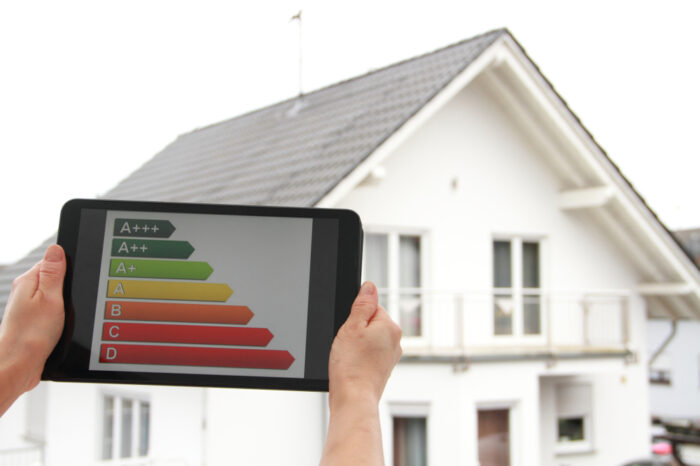

A trial by Atom Bank, in collaboration with Experian, compared carbon dioxide emissions from 1,038 homes in the bank’s mortgage book based on their EPC ratings with measurements from meter readings for the same properties.
The results showed that Atom Bank could be overestimating the carbon dioxide emissions from its residential mortgages by up to 50%, and that this difference could be the same for other banks and lenders that rely on EPCs to measure carbon emissions.
Properties with an EPC rating between A and C, which are seen as more energy efficient, also do not give out significantly lower carbon emissions compared to those with an EPC rating of D-G.
This was initially assumed to be due to personal choice by its mortgage customers, but it has also been observed in a larger national dataset. A larger report into the discrepancies as part of a government study on EPC accuracy is currently being worked on.
Atom Bank is calling on energy suppliers, government and financial services to “collaborate on EPC reform and to improve the accuracy of housing-related carbon data”.

Aldermore Insights with Jon Cooper: Edition 10 – The biggest barrier to homeownership isn’t affordability. It’s outdated lending.
Sponsored by Aldermore
The bank said that if the data is correct, then governments and banks can increase funding for low-carbon electricity and make electricity prices more competitive.
The first step is for energy providers, banks, government and the Bank of England to share data so that a “clearer understanding of actual emissions” can be secured, as well as the true cost of transitioning to net zero.
It will also allow financial institutions to more efficiently focus efforts on emission reduction.
EPC reforms should also be accelerated, moving from estimated to actual energy performance data – so using smart meters or utility bills.
Lenders should also ensure that they “finance genuine low-carbon initiatives and schemes that can reverse the man-made effects of global warming”.
By using meter data for mortgages and other loan products, lenders can “unlock a much more targeted approach to green lending that will help accelerate progress to a net zero future”.
‘EPC ratings do not reliably reflect actual household emissions’
Edward Twiddy, Atom Bank’s director of ESG, said: “The UK has made real progress in addressing the challenge of decarbonising its economy, but continuing that momentum will require better data and more targeted action. This study reveals that EPC ratings do not reliably reflect actual household emissions, with inaccurate data being a clear hindrance to reaching net zero. If most households are using similar amounts of energy, the focus should be on where that energy comes from and then how to make that clean energy as affordable as possible.
“The findings of this trial have important implications for green lending, banks’ carbon reporting, and the future use of EPCs in measuring and reducing residential emissions, which has implications for social issues like fuel poverty. Atom is collaborating with organisations such as B4NZ to engage with other banks and policymakers on the reforms needed to drive meaningful change. As the lenders of billions of pounds to households and businesses, banks like Atom have an enormous role to play in meeting the UK’s net zero commitments.”
Scott Harrison, director of strategy and innovation for business information at Experian, said: “Collaborating with Atom on this study has reinforced what we at Experian have long understood – EPCs are not a sufficiently accurate way of measuring household carbon emissions.
“This trial highlights the urgent need to shift from theoretical estimates to real-world data. By leveraging actual primary energy consumption through solutions like Experian Meter Insights, lenders can move beyond unreliable proxies and take meaningful steps toward emissions transparency, credible reporting, and real climate impact.”
Hannah Cool, COO of B4NZ, said: “Atom Bank’s decision to publish these findings sets a powerful precedent for the financial sector. Transparency is essential if we are to accelerate the transition to net zero in a cost-effective and fair way. By acknowledging the limitations of EPC-based reporting and embracing more accurate, verifiable data, Atom is demonstrating real leadership. This also opens up the opportunity to move towards consented data sharing in a frictionless way, empowering consumers while enabling lenders to make smarter, greener decisions.
“We encourage other banks to join this initiative. Only through collaboration and open data can we reform outdated methodologies and ensure that sustainable finance is built on evidence, not assumptions.”