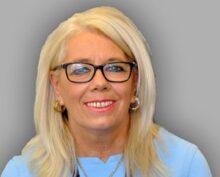
Discussing the importance of allyship, guest Lesley Cappellaro, regional manager for intermediary market development at Barclays, described an ally as someone who was trustworthy and acted as a friend.
Promoting and practicing inclusion
Jamie Page, head of protection distribution at The Exeter, said in a business environment, allyship meant acknowledging that everyone had different approaches or thought processes but had a common goal.
He said this “ensures the views and opinions of everyone are taken into account” and meant there needed to be someone to enable “common ground”.
Page said The Exeter was “inclusive and progressive” as its ex-co had a diverse background, including its CEO Isabel Langton. Page said he was part of a senior leadership team with a 50/50 gender split, mix of ages, and the business had employees in diverse locations.

Aldermore Insights with Jon Cooper: Edition 9 – Why lending strategy is becoming more central in buy to let
Sponsored by Aldermore
He said this, as well as having members who did not have previous experience in financial services, offered “a different perspective”.
He said the diversity of thought within The Exeter meant decisions were reached faster because the firm was able to consider more options and viewpoints than it previously would have.
Allowing employees to have a voice also noticeably reduced anxiety and stress across the team, Page added.
Cappellaro said inclusivity boosted morale, motivation and output because people felt included and wanted the best for the company they worked for.
“If you’ve got a team of people that are feeling accepted, then they’re always going to go that extra mile,” she added.
She also has a diverse broker population and team that live across the country, who have different thoughts and values, adding: “If you don’t look for difference… you’ll just keep getting the same. And often you’ll see companies wanting to make changes, to move faster, and they can’t because they just employ another person like them. If we all have the same people, we just continually get the same ideas. There’s no point in Barclays or myself employing another clone like me.”
Cappellaro said this was where allyship came in, because part of it meant challenging the status quo.
What does allyship look like?
Cappellaro said that although allyship was a new buzzword, she had had allies in the past, but it was not something that was spoken about.
She said she experienced discrimination early in her career as a gay woman, finding it difficult because coming out at work “was not an option”. At a previous job, someone found out that Cappellaro was gay and she was “forced to leave”.
“I was told if I didn’t leave, I would be sacked, so I had to go out on a non-compromised agreement and not speak to anyone,” she added.
She was in her mid-30s at the time and Cappellaro said it knocked her confidence because it happened at a time when her career “should have been going really well”.
Her biggest ally at the time was her daughter, who Cappellaro said consistently supported her.
She said this made her conscious of supporting others, because she believed if someone had had her back at the time, “I don’t think the company would have behaved in the way that they did”.
To be an ally, it is not enough to just talk about it, it has to be shown, Cappellaro said. This could be through the spectrum of employees and diversity within senior roles.
Page said he did not experience anything similar but, as an ally, made sure to call out bad behaviour. He also does not leave situations to “bubble away” and instead aims to educate others to prevent situations from escalating.
Page described this as “respectful candour”, adding: “Constructively calling people out as good advocacy to good dynamics and diversity in the team and allows that different perspective, that different diversity to then thrive within a team and also importantly, within a business.”
Mentorship complementing allyship
Page said The Exeter had leadership development programmes, mentoring programmes, as well as skills and experience-based programmes with the aim of helping the business develop and thrive.
He said mentoring was about “sharing professional knowledge, skills and experience” and it was helpful if it went both ways, as both parties could get something out of it.
Coaching was about helping someone improve their skills, while Page said allyship involved “proactivity, taking steps to eliminate barriers”.
Cappellaro agreed, saying coaching and mentorship were more formal, while allyship was relaxed and not booked in, giving a person someone they could reach out to when times get tough.
Page said allyship meant having people, individuals and a culture that you knew were there to support you.
To become an ally, Cappellaro said people should “lean into the topics that are most uncomfortable”, otherwise they would not learn.
“Think about your own biases and your own discriminations that you’ve experienced or seen or heard; [how] does that make you feel? You can’t always put yourself in everyone’s shoes, but try,” she added.
She also said people should think of the times they had been supported and how it made them feel, which could be anywhere, like being at an event, coming across as available and speaking to new people who may be on their own.
She said people could not “be allies to everyone all of the time” but should think about what was important to them and how they wanted to be seen.
Page said people should be aware of their blind spots, identify their own biases and make decisions based on that.
He added that people should always acknowledge their privilege, even when they do not understand everyone’s circumstances.
“Will I ever understand? Probably not, not fully, but will I try? Absolutely yes,” he added.
Page said being an ally was an ongoing process that required education and a willingness to learn and grow, while being consistent with it.
“It’s certainly got to be a process, it’s not a one-and-done to try and learn and understand,” he said.
Listen to the full episode [42:40] hosted by Iain Cartlidge, managing director at AE3 Media, featuring guests Lesley Cappellaro, regional manager for intermediary market development at Barclays, and Jamie Page, head of protection distribution at The Exeter.